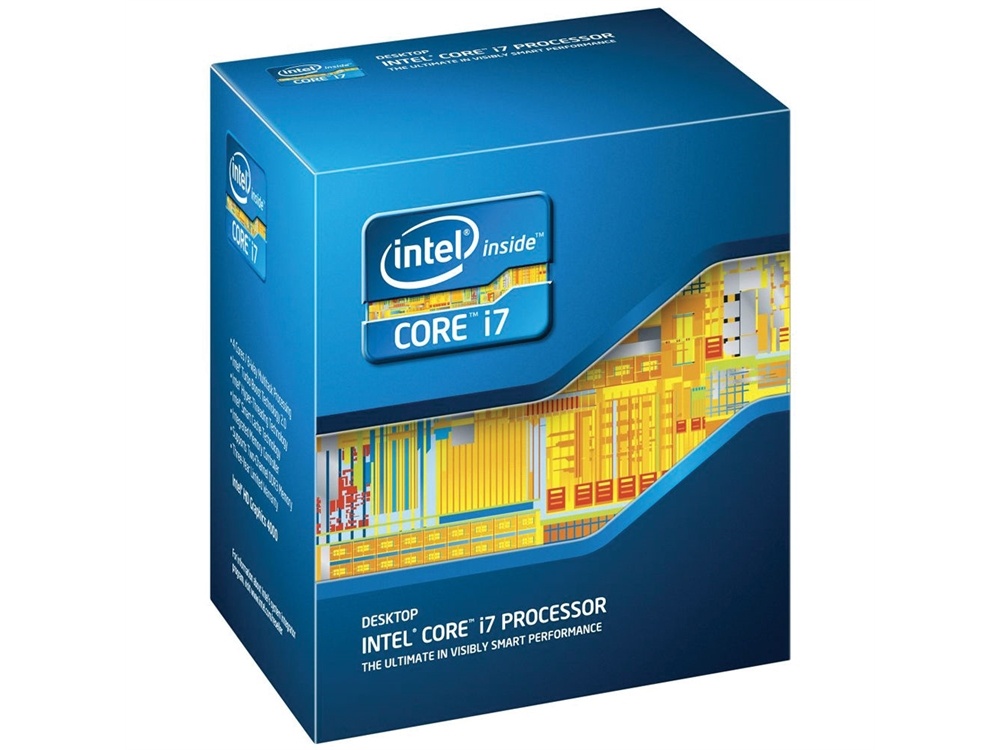



















































































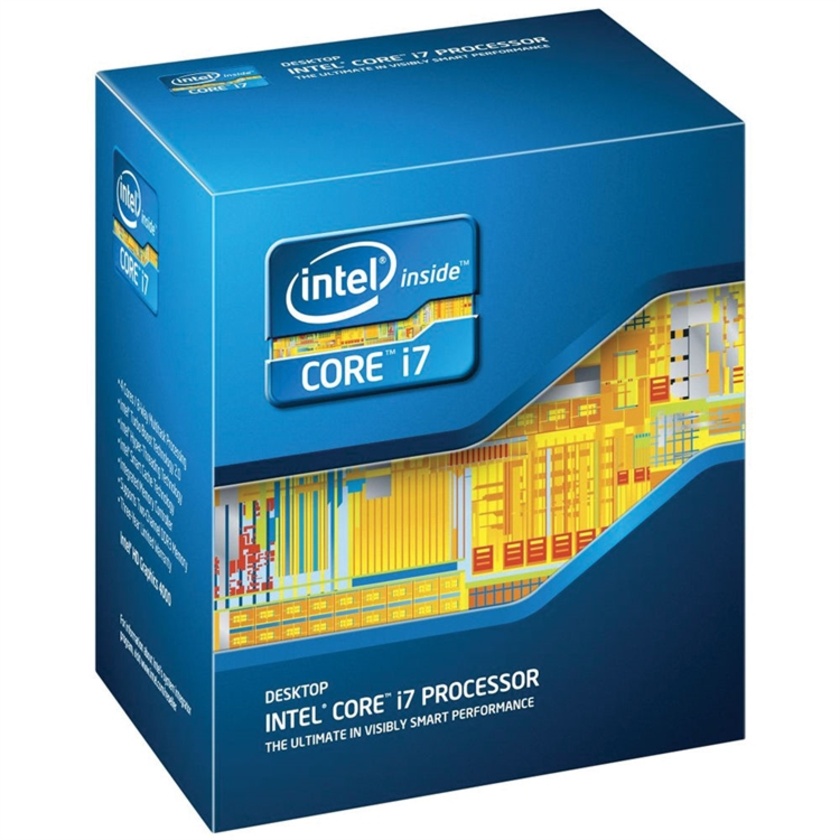
The Core i7-4910MQ 2.9 GHz Quad-Core Mobile Processor from Intel is the fourth generation of the Core i7 mobile product line that is now built using Haswell architecture. This processor features a base frequency of 2.9 GHz and, as with many Haswell technologies, it comes with features such as Intel Turbo Boost 2.0, Hyper-Threading, and vPro. With Intel Turbo Boost 2.0 technology, the maximum clock rate this processor can achieve is 3.9 GHz. Additionally, this processor also features four cores with eight threads in a FCPGA946 socket and has 8MB of Intel Smart Cache memory. Having four cores allows the processor to run multiple programmes simultaneously without slowing down the system, while the eight threads allow applications to complete tasks sooner by working in parallel.
This Intel Core i7-4910MQ 2.9 GHz Quad-Core Mobile Processor is well suited for professionals who require reliability and high performance, whether they're designing digital content, working with CAD models, analysing manufacturing processes, or running other performance-intensive applications. This processor also supports up to 32GB of DDR3L-1333/1600 MHz RAM and has integrated Intel HD Graphics 4600 with support for up to three simultaneous displays. It is also equipped with SSE 4.1/4.2 & AVX 2.0 Extensions, as well as AES New Instructions.
Features
Intel Quick Sync Video
Intel Quick Sync Video delivers fast conversion of video for portable media players, online sharing, and video editing and authoring
Intel InTru 3D Technology
Intel InTru 3D Technology provides stereoscopic 3-D Blu-ray playback in full 1080p resolution over HDMI 1.4 and premium audio
Intel Insider
Intel Insider delivers premium HD content to an Ultrabook or PC
Intel Wireless Display
Intel Wireless Display is technology that enables wireless streaming of movies, photos, websites, and more from an Ultrabook or PC to an HDTV
Intel Flexible Display Interface (Intel FDI)#####
The Intel Flexible Display Interface is an innovative path for two independently controlled channels of integrated graphics to be displayed
Intel Clear Video HD Technology
Intel Clear Video HD Technology, like its predecessor, Intel Clear Video Technology, is a suite of image decode and processing technologies built into the integrated processor graphics that help improve video playback, delivering cleaner, sharper images with more natural, accurate, and vivid colours, and a clear and stable video picture. Intel Clear Video HD Technology adds video quality enhancements for richer colour and more realistic skin tones
Intel Turbo Boost 2.0 Technology
Intel Turbo Boost Technology increases the processor's frequency as needed, by taking advantage of thermal and power headroom to give you a burst of speed when you need it, and increased energy efficiency when you don't
Intel vPro Technology
Intel vPro Technology is a set of security and manageability capabilities built into the processor, aimed at addressing four critical areas of IT security: threat management (including protection from rootkits, viruses, and malware), identity and web site access point protection, confidential personal and business data protection, and remote and local monitoring, remediation, and repair of PCs and workstations
Intel Hyper-Threading Technology
Intel Hyper-Threading Technology delivers two processing threads per physical core. Highly threaded applications can get more work done in parallel, completing tasks sooner
Intel Virtualization Technology (VT-x)#####
Intel Virtualization Technology allows one hardware platform to function as multiple "virtual" platforms. It offers improved manageability by limiting downtime and maintaining productivity by isolating computing activities into separate partitions
Intel Virtualization Technology for Directed I/O (VT-d)#####
Intel Virtualization Technology for Directed I/O continues from the existing support for IA-32 (VT-x) and Itanium processor (VT-i) virtualization, adding new support for I/O-device virtualization. Intel VT-d can help end users improve the security and reliability of systems, and also improve performance of I/O devices in virtualized environments
Intel VT-x with Extended Page Tables (EPT)#####
Intel VT-x with Extended Page Tables, also known as Second Level Address Translation (SLAT), provides acceleration for memory-intensive virtualized applications. Extended Page Tables in Intel Virtualization Technology platforms reduce the memory and power overhead costs, and increase battery life through hardware optimisation of page table management
Intel TSX-NI
Intel Transactional Synchronisation Extensions New Instructions (Intel TSX-NI) are a set of instructions focused on multi-threaded performance scaling. This technology helps make parallel operations more efficient via improved control of locks in software
Intel 64
Intel 64 architecture delivers 64-bit computing on server, workstation, desktop, and mobile platforms when combined with supporting software. Intel 64 architecture improves performance by allowing systems to address more than 4GB of both virtual and physical memory
Idle States
Idle States (C-states) are used to save power when the processor is idle. C0 is the operational state, meaning that the CPU is doing useful work. C1 is the first idle state, C2 the second, and so on, where more power saving actions are taken for numerically higher C-states
Enhanced Intel SpeedStep Technology
Enhanced Intel SpeedStep Technology is an advanced means of enabling high performance while meeting the power-conservation needs of mobile systems. Conventional Intel SpeedStep Technology switches both voltage and frequency in tandem between high and low levels in response to processor load. Enhanced Intel SpeedStep Technology builds upon that architecture using design strategies such as Separation between Voltage and Frequency Changes, and Clock Partitioning and Recovery
Thermal Monitoring Technologies
Thermal Monitoring Technologies protect the processor package and the system from thermal failure through several thermal management features. An on-die Digital Thermal Sensor (DTS) detects the core's temperature, and the thermal management features reduce package power consumption and thereby temperature, when required in order to remain within normal operating limits
Intel Identity Protection Technology
Intel Identity Protection Technology is a built-in security token technology that helps provide a simple, tamper-resistant method for protecting access to your online customer and business data from threats and fraud. Intel IPT provides a hardware-based proof of a unique user's PC to websites, financial institutions, and network services; providing verification that it is not malware attempting to login. Intel IPT can be a key component in two-factor authentication solutions to protect your information at websites and business log-ins
AES New Instructions
Advanced Encryption Standard New Instructions (AES-NI) are a set of instructions that enable fast and secure data encryption and decryption. AES-NI are valuable for a wide range of cryptographic applications, such as applications that perform bulk encryption/decryption, authentication, random number generation, and authenticated encryption
Secure Key
Intel Secure Key consists of a digital random number generator that creates truly random numbers to strengthen encryption algorithms
Trusted Execution Technology
Intel Trusted Execution Technology for safer computing is a versatile set of hardware extensions to Intel processors and chipsets that enhance the digital office platform with security capabilities, such as measured launch and protected execution. It enables an environment where applications can run within their own space, protected from all other software on the system
Execute Disable Bit
Execute Disable Bit is a hardware-based security feature that can reduce exposure to viruses and malicious-code attacks, and prevent harmful software from executing and propagating on the server or network
Anti-Theft Technology
Intel Anti-Theft Technology (Intel AT) helps keep your laptop safe and secure in the event that it's ever lost or stolen. Intel AT requires a service subscription from an Intel AT-enabled service provider
Specifications
| Processor Number | i7-4910MQ |
| Intel Smart Cache | 8 MB |
| DMI2 | 5 GT/s |
| Instruction Set | 64-bit |
| Instruction Set Extensions | SSE 4.1/4.2, AVX 2.0 |
| Embedded Options Available | No |
| Lithography | 22 nm |
| Conflict Free | Yes |
| # of Cores | 4 |
| # of Threads | 8 |
| Processor Base Frequency | 2.9 GHz |
| Max Turbo Frequency | 3.9 GHz |
| TDP | 47 W |
| Max Memory Size | 32 GB (dependant on memory type) |
| Memory Types | DDR3L-1333/1600 |
| Max # of Memory Channels | 2 |
| Max Memory Bandwidth | 25.6 GB/s |
| ECC Memory Supported | No |
| Processor Graphics | Intel HD Graphics 4600 |
| Graphics Base Frequency | 400 MHz |
| Graphics Max Dynamic Frequency | 1.3 GHz |
| Graphics Output | eDP, DP, HDMI, VGA |
| Intel Quick Sync Video | Yes |
| Intel InTru 3D Technology | Yes |
| Intel Insider | Yes |
| Intel Wireless Display | Yes |
| Intel Flexible Display Interface | Yes |
| Intel Clear Video HD Technology | Yes |
| # of Displays Supported | 3 |
| PCI Express Revision | 3.0 |
| PCI Express Configurations | 1x16, 2x8, 1x8, 2x4 |
| Max # of PCI Express Lanes | 16 |
| Max CPU Configuration | 1 |
| TJUNCTION | 212°F / 100°C |
| Package Size | 1.48 x 1.48 x 0.19" / 37.50 x 37.50 x 4.70 mm |
| Sockets Supported | FCPGA946 |
| Low Halogen Options Available | See MDDS |
| Intel Turbo Boost Technology | 2.0 |
| Intel vPro Technology | Yes |
| Intel Hyper-Threading Technology | Yes |
| Intel Virtualization Technology (VT-x) | Yes |
| Intel Virtualization Technology for Directed I/O | Yes |
| Intel VT-x with Extended Page Tables (EPT) | Yes |
| Intel TSX-NI | Yes |
| Intel 64 | Yes |
| Idle States | Yes |
| Enhanced Intel SpeedStep Technology | Yes |
| Thermal Monitoring Technologies | Yes |
| Intel Identity Protection Technology | Yes |
| AES New Instructions | Yes |
| Secure Key | Yes |
| Trusted Execution Technology | Yes |
| Execute Disable Bit | Yes |
| Anti-Theft Technology | Yes |